
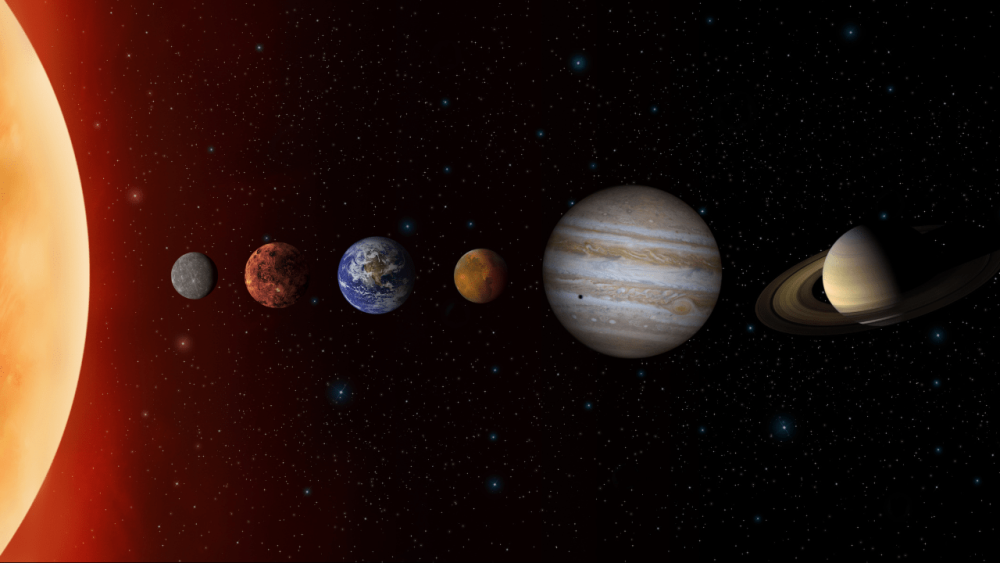
The solar system has fascinated humans for centuries. With its eight planets, countless moons, asteroids, and comets, it’s like a cosmic neighborhood full of mysteries. Today, let’s embark on a journey through our solar system and uncover the secrets of its planets.
1. Mercury: The Swift Messenger

Mercury is the closest planet to the Sun. Its surface is covered with craters, much like our Moon, due to constant asteroid impacts. Despite its proximity to the Sun, Mercury has a very thin atmosphere, meaning it experiences extreme temperature swings—from -173°C at night to 427°C during the day.
Interesting Fact: A day on Mercury (sunrise to sunrise) lasts 176 Earth days, longer than its year of 88 Earth days!
2. Venus: The Hottest Planet

Venus is often called Earth’s “sister planet” because of its similar size and structure. However, its atmosphere is dense and full of carbon dioxide, causing a runaway greenhouse effect. This makes Venus the hottest planet in the solar system, with surface temperatures reaching 465°C, hot enough to melt lead.
Secret of Venus: Its thick clouds hide the planet’s surface, making it challenging for scientists to explore. Space probes like Magellan have mapped its surface using radar.
3. Earth: Our Blue Home
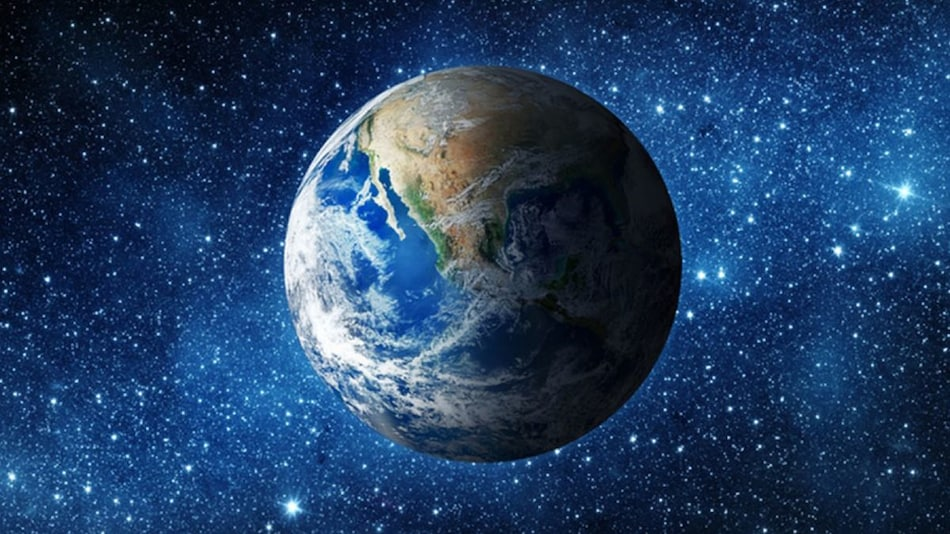
Earth is the only planet known to support life, thanks to its perfect mix of water, atmosphere, and distance from the Sun. It has a protective magnetic field and a breathable atmosphere that keeps us safe from harmful solar radiation.
Fun Fact: Earth is not perfectly round; it’s slightly flattened at the poles, a shape known as an oblate spheroid.
4. Mars: The Red Planet
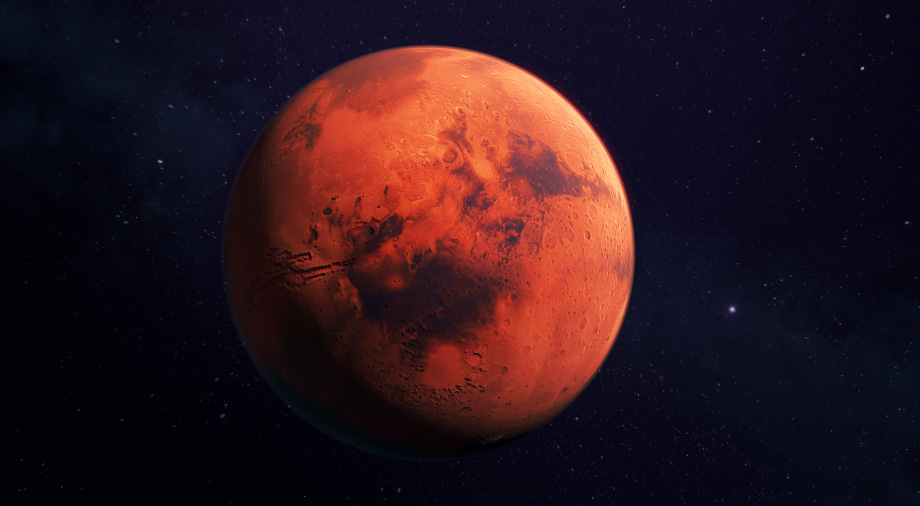
Mars, the Red Planet, has captivated scientists and explorers for decades. Its red color comes from iron oxide (rust) on its surface. Mars has the tallest volcano in the solar system, Olympus Mons, and a canyon system, Valles Marineris, that dwarfs the Grand Canyon.
Exploration Secret: Rovers like Perseverance and Curiosity are searching for signs of ancient life and studying the possibility of future human colonization.
5. Jupiter: The Gas Giant
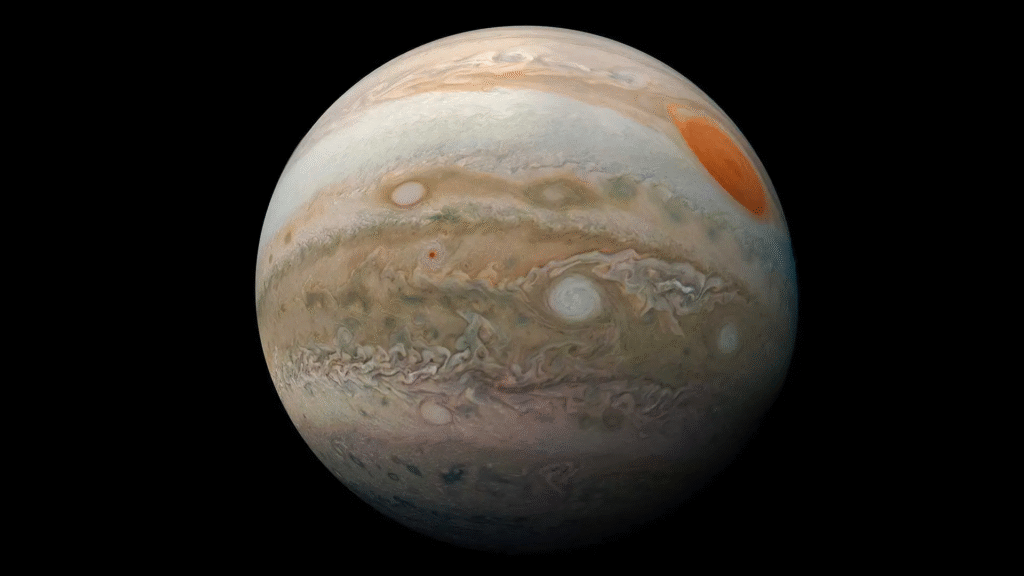
Jupiter is the largest planet in our solar system. Its atmosphere is made mostly of hydrogen and helium, with a striking Great Red Spot, a storm larger than Earth. Jupiter has 79 known moons, including Ganymede, the largest moon in the solar system.
Interesting Secret: Jupiter’s strong gravity protects inner planets by pulling in comets and asteroids that might otherwise hit Earth.
6. Saturn: The Ringed Beauty
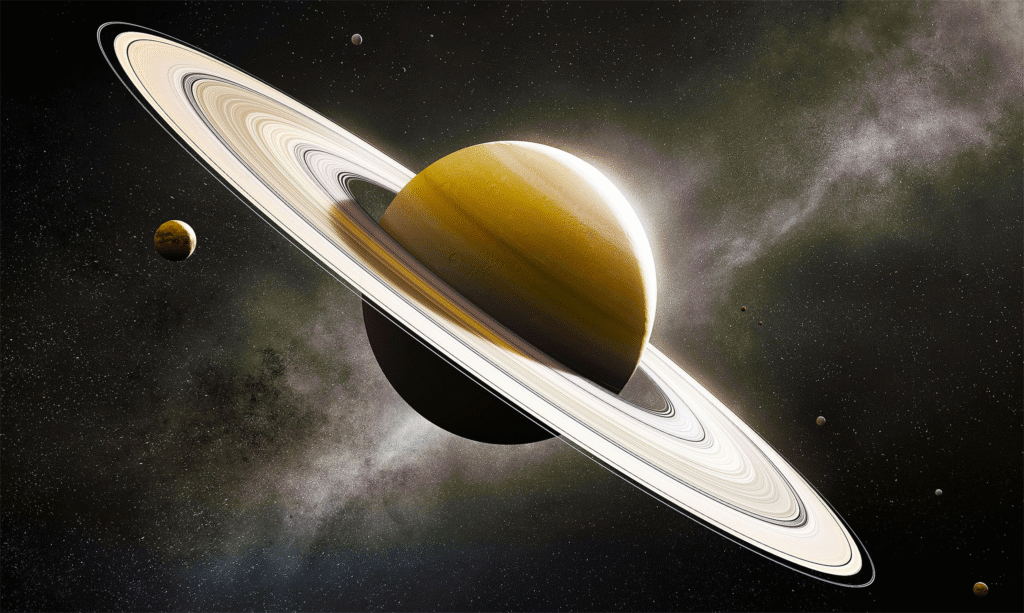
Saturn is famous for its magnificent rings, composed of ice, rock, and dust. These rings are thin but span hundreds of thousands of kilometers. Saturn is also a gas giant like Jupiter but is less dense; in fact, it would float on water if there were a big enough ocean!
Secret: Saturn has 83 confirmed moons, including Titan, which has its own thick atmosphere and lakes of liquid methane.
7. Uranus: The Tilted Planet
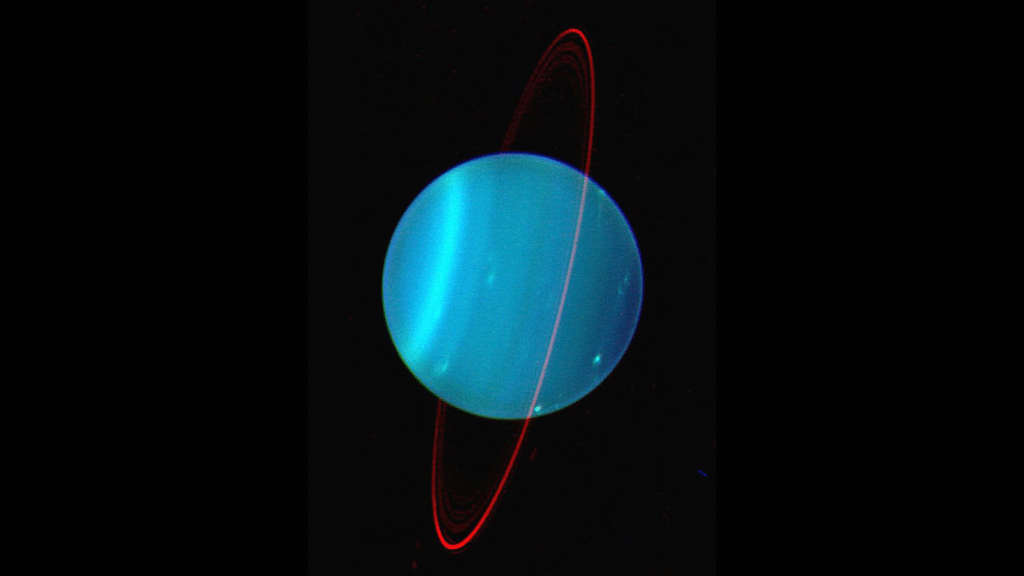
Uranus is unique because it rotates on its side, likely due to a massive collision billions of years ago. Its pale blue color comes from methane in its atmosphere, which absorbs red light and reflects blue.
Fun Fact: Uranus experiences extreme seasons, with each pole facing the Sun for 42 Earth years at a time!
8. Neptune: The Windy Giant
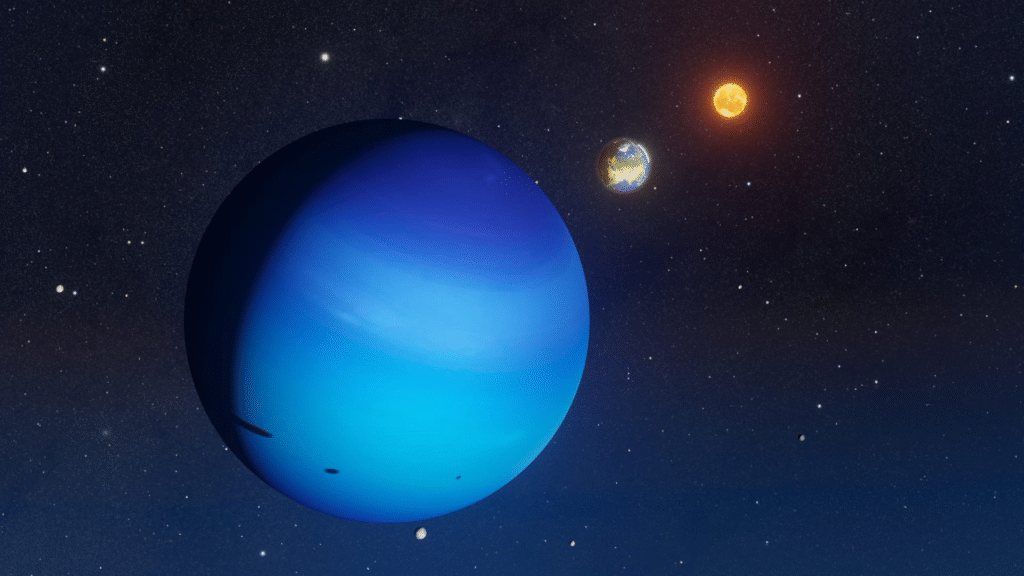
Neptune, the farthest planet from the Sun, is known for its intense winds, reaching 2,100 km/h, the fastest in the solar system. Like Uranus, Neptune appears blue due to methane, but it also has a mysterious Great Dark Spot, a storm similar to Jupiter’s Great Red Spot.
Secret of Neptune: Its moon Triton is geologically active, with geysers that spew nitrogen into space.
9. Beyond the Planets: Dwarf Worlds and the Kuiper Belt
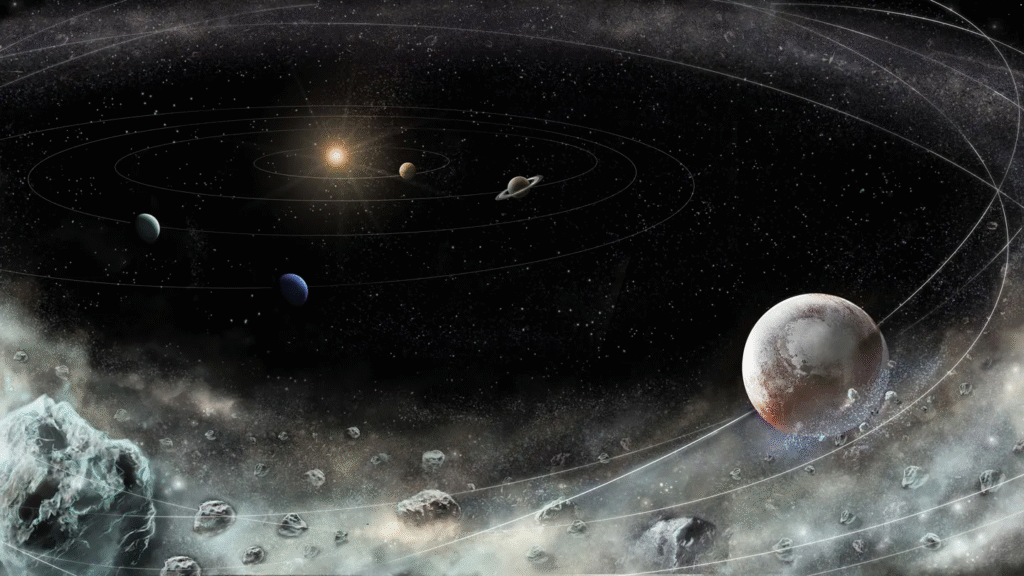
Beyond Neptune lies the Kuiper Belt, home to dwarf planets like Pluto, Haumea, and Makemake. These icy worlds hold clues about the solar system’s formation and are targets for future space missions.
Fun Fact: Pluto, once considered the ninth planet, has a heart-shaped glacier named Tombaugh Regio, a tribute to its discoverer.
Conclusion
The solar system is a treasure trove of secrets, each planet offering a unique story. From Mercury’s scorching days to Neptune’s supersonic winds, there’s so much to explore and learn. Understanding our cosmic neighborhood not only satisfies human curiosity but also helps us protect and appreciate our home planet, Earth.
The journey through the solar system is far from over. As technology advances, more secrets of these celestial bodies will be revealed, taking us closer to the ultimate question: Are we alone in the universe?
FAQs
Q1: How many planets are in the solar system?
A1: There are eight planets: Mercury, Venus, Earth, Mars, Jupiter, Saturn, Uranus, and Neptune.
Q2: Which planet is the hottest?
A2: Venus is the hottest due to its dense atmosphere causing a runaway greenhouse effect.
Q3: Can humans live on Mars?
A3: Currently, humans cannot survive on Mars without life support systems, but future colonization is being studied.
Q4: What makes Saturn’s rings so special?
A4: Saturn’s rings are made of ice, rock, and dust and are one of the most spectacular features visible from space.
#SolarSystem #PlanetsOfTheSolarSystem #SpaceExploration #AstronomyLovers #CosmicJourney #PlanetSecrets #SpaceFacts #UniverseMysteries #LearnAstronomy #PlanetScience #SpaceTravel #GalaxyExploration #AstroWorld #ScienceLovers #Cosmos #Carrerbook #Anslation
Leave a Reply