
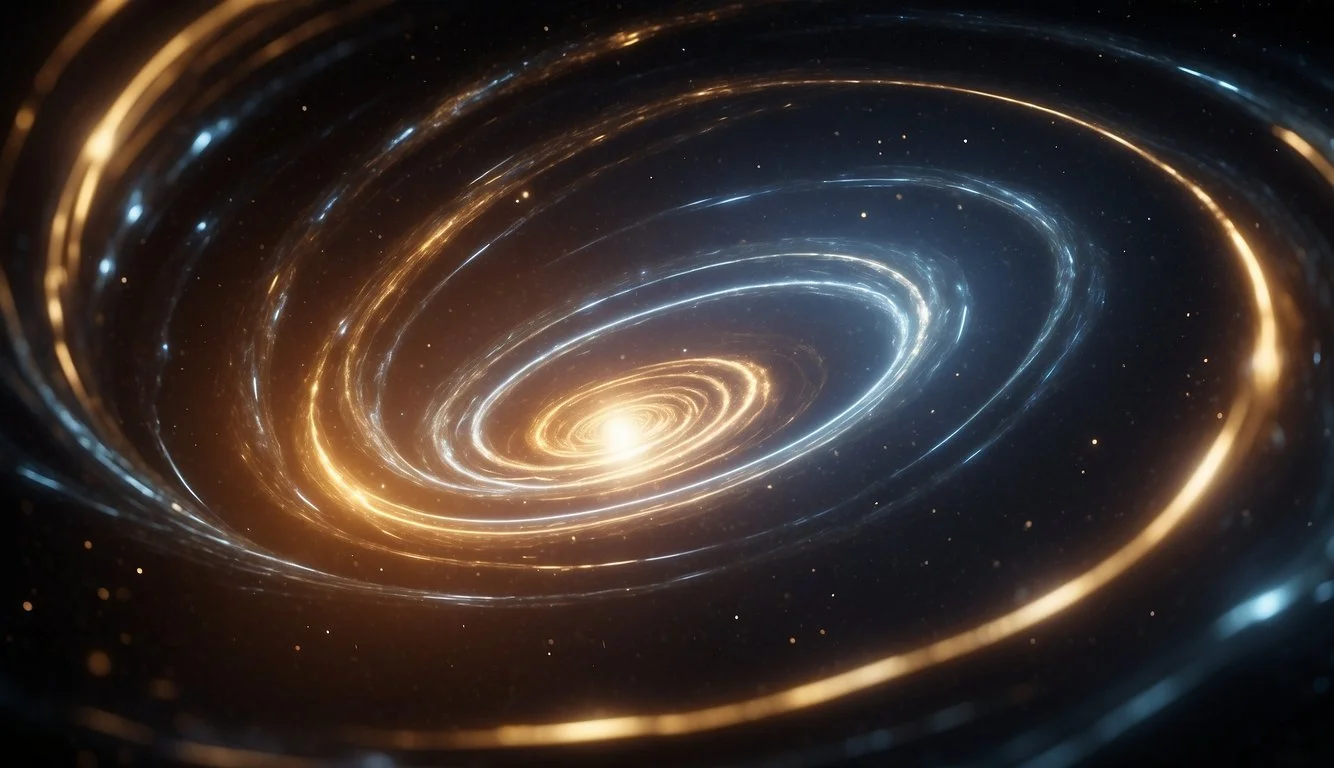
Black holes are some of the most mysterious and fascinating objects in our universe. They are cosmic giants with gravitational pulls so strong that even light cannot escape them. Despite their invisibility, black holes have captured the imagination of scientists, astronomers, and space enthusiasts for decades. In this blog, we’ll dive deep into the secrets of black holes, their formation, types, and why they are crucial to understanding the universe.
What is a Black Hole?

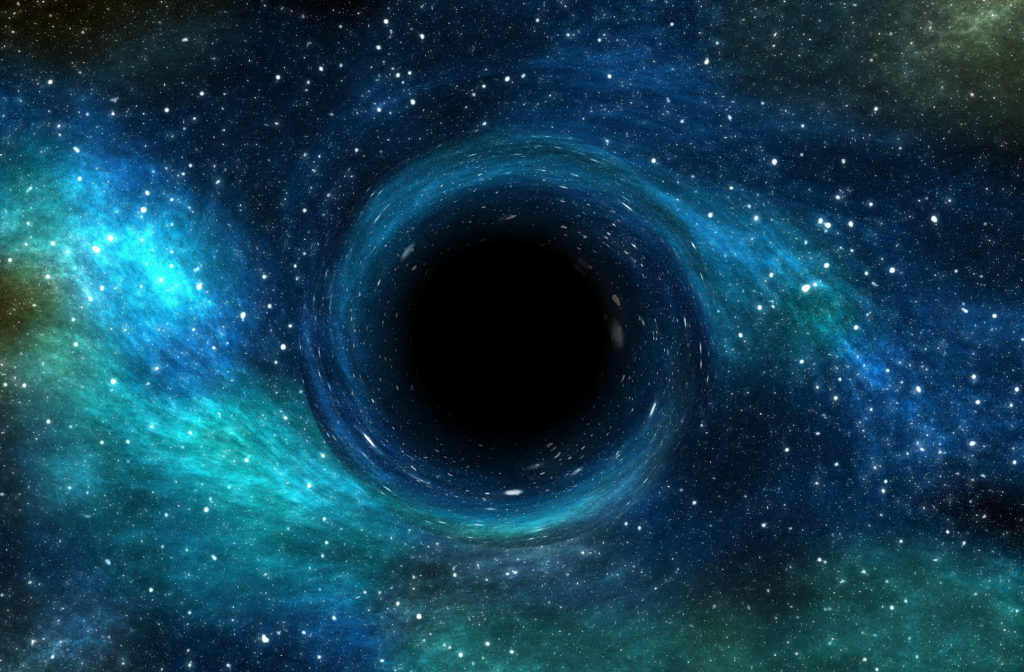
A black hole is essentially a region in space where gravity is so strong that nothing, not even light, can escape from it. Imagine a cosmic vacuum cleaner sucking everything around it, but with far more intensity than anything on Earth. They are invisible to the naked eye, which is why scientists study them through their effects on nearby stars and gases.
The boundary around a black hole is called the event horizon. Once something crosses this point, it cannot return. Think of it like crossing a point of no return—like falling into a deep pit with no bottom.
How Do Black Holes Form?

Black holes are formed when massive stars reach the end of their life cycle. After burning all their nuclear fuel, the star collapses under its own gravity. If the remaining mass is enough, it forms a black hole. There are different kinds of black holes based on their mass and formation process:
- Stellar Black Holes – These are formed from single massive stars collapsing after a supernova explosion. They usually have masses between 5 and 20 times that of our Sun.
- Intermediate Black Holes – Medium-sized black holes, often formed from the merging of smaller black holes or dense star clusters.
- Supermassive Black Holes – These giants reside at the centers of galaxies, including our Milky Way. Their mass ranges from millions to billions of times the Sun. Scientists are still figuring out how they grow so massive.
How Do Scientists Detect Black Holes?
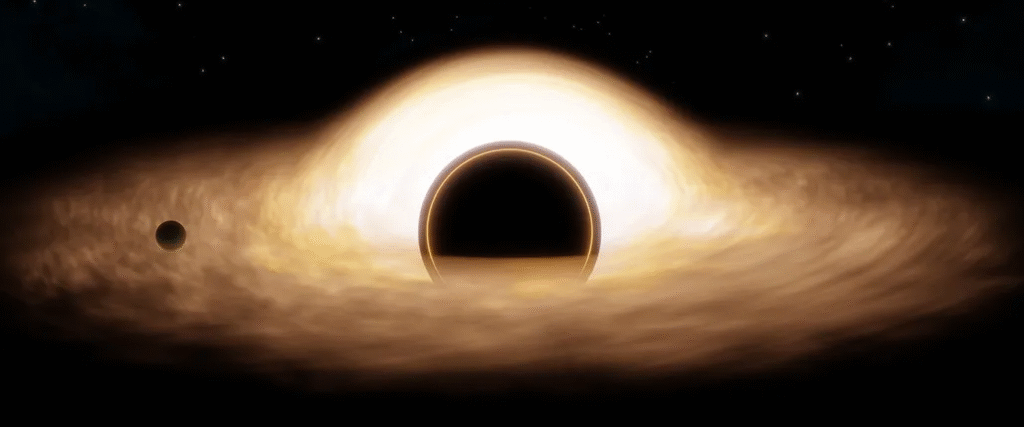
Even though black holes are invisible, their presence can be detected indirectly:
- Gravitational Effects: When a black hole passes near a star or gas cloud, its gravity affects their motion. Scientists can calculate the black hole’s mass and location from these movements.
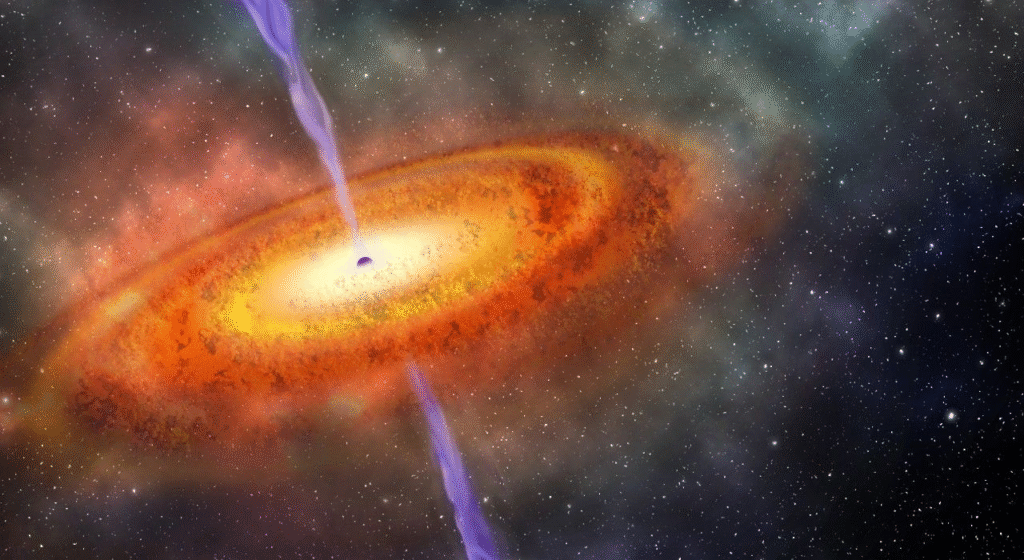
- Accretion Disks: Matter falling into a black hole forms a bright, spinning disk called an accretion disk. This disk emits X-rays, which telescopes like Chandra and XMM-Newton can detect.
- Gravitational Waves: When two black holes merge, they create ripples in spacetime called gravitational waves. Instruments like LIGO and Virgo have been detecting these waves, confirming black hole collisions.
Interesting Facts About Black Holes
- Time Dilation: Near a black hole, time slows down. If you were close to a black hole and returned to Earth, you could age much slower than everyone else.
- Black Holes Can “Evaporate”: According to Stephen Hawking, black holes emit radiation (Hawking radiation) and can slowly lose mass over time.
- Our Milky Way Has a Supermassive Black Hole: Sagittarius A*, the supermassive black hole at the center of our galaxy, has a mass of about 4 million suns!
Why Are Black Holes Important?
Black holes aren’t just cosmic monsters—they are key to understanding the universe:
- They test the limits of Einstein’s theory of general relativity.
- They help us study extreme physics conditions impossible on Earth.
- They provide clues about galaxy formation and evolution.
Conclusion
Black holes remain one of the most intriguing and mysterious parts of our cosmos. From the collapse of massive stars to supermassive giants anchoring galaxies, they challenge our understanding of physics and reality. Studying them not only satisfies human curiosity but also helps us uncover the secrets of the universe itself.
Exploring black holes is like looking into the abyss of space and discovering that it’s more alive and powerful than we ever imagined. The more we study them, the more we realize the universe still holds countless secrets waiting to be unraveled.
Disclaimer: This blog is for informational and educational purposes only. The content is based on scientific research and current astronomical studies but should not be considered as professional advice.
#BlackHoles #SpaceScience #Astrophysics #CosmicGiants #UniverseMysteries #SpaceExploration #AstronomyLovers #SupermassiveBlackHole #ScienceFacts #SpaceGeek #Carrerbook #anslation
Leave a Reply