
The solar system is one of the most fascinating parts of our universe. It’s not just a group of planets orbiting the Sun – it’s a whole cosmic neighborhood filled with mysteries, wonders, and surprises. Whether you’re a curious kid or an adult who loves space, here are some amazing facts about the solar system that will blow your mind!
1. The Sun is MASSIVE
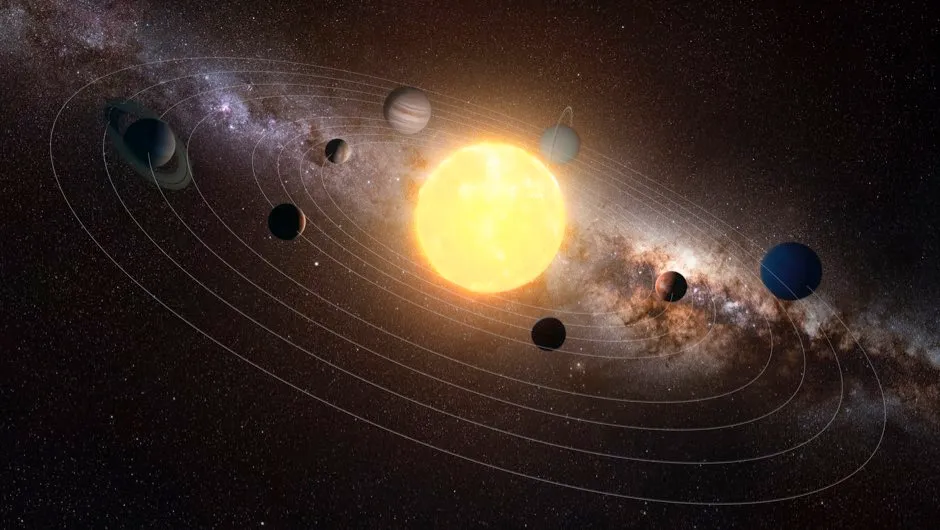
Did you know that the Sun makes up 99.8% of the total mass of the entire solar system? It’s so big that you could fit 1.3 million Earths inside it! The Sun isn’t just a ball of fire—it’s a gigantic nuclear reactor powering our entire solar system.
2. Mercury: The Fastest Planet
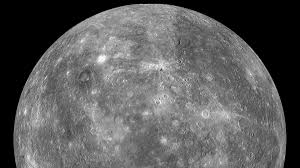
Mercury is the closest planet to the Sun and also the fastest. It zooms around the Sun at a speed of 47.87 km/s (almost 172,000 km/h!). Despite being so close to the Sun, it doesn’t have an atmosphere to trap heat, so temperatures swing wildly between -173°C at night to 427°C during the day.
3. Venus: Earth’s Twin, But Hotter

Venus is often called Earth’s twin because it’s similar in size. But don’t be fooled—Venus is the hottest planet in the solar system with a surface temperature of 465°C. Its thick atmosphere traps heat in a super-strong greenhouse effect, making it hotter than Mercury, even though it’s farther from the Sun!
4. Earth: Our Precious Home

Earth is the only planet known to support life. Its unique combination of water, atmosphere, and magnetic field protects us from harmful radiation and keeps life thriving. Fun fact: Earth isn’t a perfect sphere—it’s slightly flattened at the poles, making it an oblate spheroid.
5. Mars: The Red Planet

Mars, with its reddish color, has fascinated humans for centuries. It’s home to the largest volcano in the solar system, Olympus Mons, which is 3 times taller than Mount Everest! Mars also has the longest canyon, Valles Marineris, which is 4000 km long—almost the width of India!
6. Jupiter: The Giant of the Solar System

Jupiter is the king of planets. It’s the largest planet and so big that all the other planets could fit inside it. Jupiter’s famous Great Red Spot is actually a giant storm raging for over 400 years!
7. Saturn: The Ringed Beauty

Saturn is known for its spectacular rings, made mostly of ice and rock. Even though Saturn looks huge, it’s actually less dense than water—if you could place it in a giant bathtub, it would float!
8. Uranus and Neptune: The Ice Giants

Uranus spins on its side, making its seasons extremely unusual, each lasting 42 years! Neptune, the farthest planet, has the strongest winds in the solar system, reaching up to 2,100 km/h!
9. Pluto: Once a Planet, Now a Dwarf Planet
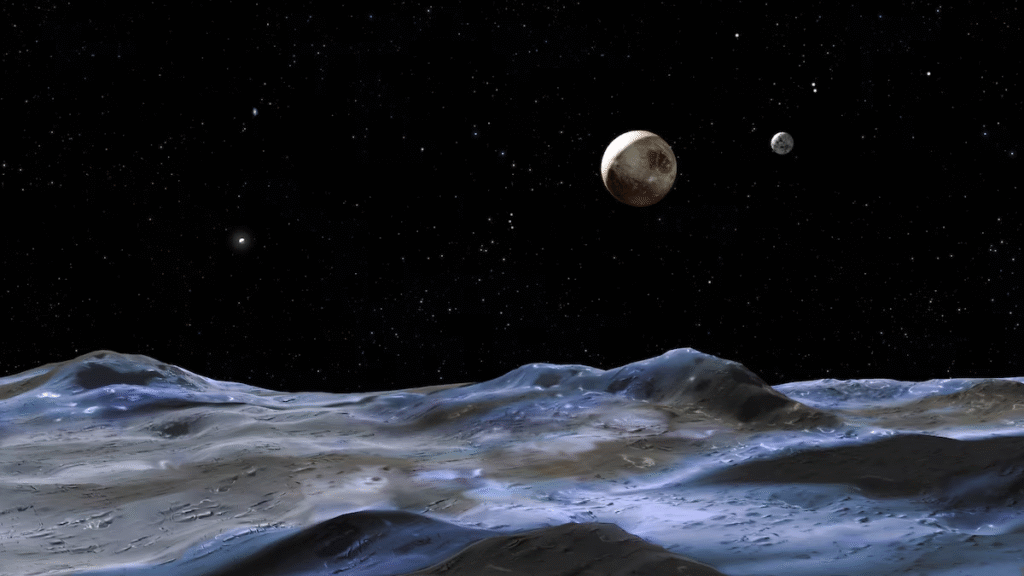
Pluto was considered the ninth planet until 2006. It’s tiny, icy, and mysterious, but still captures our imagination. It takes 248 years to complete one orbit around the Sun, which means a single Pluto year is longer than any human lifetime!
10. Asteroids, Comets, and Meteors

The solar system isn’t just planets. It’s also full of asteroids, comets, and meteors. The asteroid belt between Mars and Jupiter contains millions of space rocks. Comets, like Halley’s Comet, have tails that point away from the Sun, creating a stunning cosmic display.
Fun Tips to Explore the Solar System at Home
- Use a globe and flashlight to understand how planets orbit the Sun.
- Watch documentaries like “Cosmos” or NASA videos for amazing visuals.
- Try stargazing apps to locate planets and constellations in the night sky.
The solar system is not just science—it’s magic, mystery, and adventure rolled into one. Every planet, moon, and asteroid has a story to tell. So next time you look at the night sky, remember—you’re part of this incredible cosmic family!
#SolarSystemFacts #SpaceForKids #AstronomyLovers #Planets #UniverseFacts #NASA #CosmicWonders #SpaceExploration #AmazingSpace #KidsScience #AdultLearning #Carrerbook #Anslation
Leave a Reply